
Analyzing Gemstones: A Color-Based Approach
Color is a defining property in gemstone evaluation. Our team has developed a proprietary method for color assessment using advanced computer vision and spectral analysis. The cornerstone of our methodology is the precise quantification of the dominant hue's concentration. Based on this data, we calculate a unique Color Gradation Coefficient.
Gemstone Color Grading Methodology
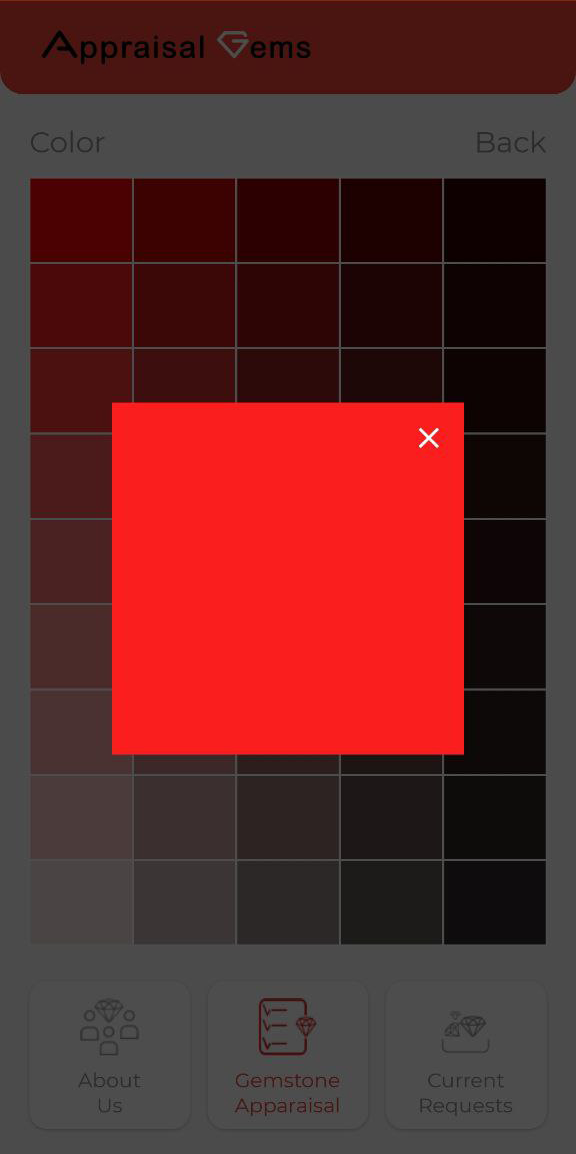
Our application utilizes the following approach to determine a stone's value based on its color. We employ 32 primary hues as defined by GIA. (A separate color palette is used for trade color names.) For each of these hues, we have constructed a "color plane." On this plane, the X-axis represents Saturation – indicating how pure and neutral the stone's color appears. The Y-axis represents Brightness, describing the color's intensity from light to dark. Each coordinate point in our color table corresponds to a specific percentage of the base hue. For example, in the "R (Red)" hue, point 1/1 may represent nearly 100% red, while point 2/4 might correspond to approximately 72% red. Thus, a gem whose color matches point 2/4 would have a value equal to 0.72 times the value of a gem at point 1/1. However, this rule is not universal. Once the base color percentage falls below 50% and the color begins to "fade," we apply an additional reduction coefficient to the stone's price per carat.
For example:
- Bright/Medium (6/5) would have a coefficient of 1.
- Bright/Light (6/3) would have a coefficient of 0.7.
- Moderately Strong/Medium Light (4/4) would have a coefficient of 0.65.
Gemstone Color Examples and Price Trends
This method is applicable to various precious and non-precious stones, such as ruby, emerald, and sapphire, whether they are faceted or cabochon. These color coefficients affect the price per carat of the gem. The color is only one aspect of quality of the gems and further quality analysis is recommended. Our system allows tracking price trends based on color grading.
The red hue color table below illustrates the points of intersection between 'Appraisal Gems''s color methodology and GIA's color grading system.
Visual Color Assessment of Gemstones
Accurately assessing the color of a gem is a crucial step in evaluating its quality and value. Here’s a guide on how to visually assess gemstone color:
How to Visually Determine Gem Color
- Observe the gem from a distance of 20-40 cm from your eyes. View it from all sides and at various angles. The gem should not be held in a static position while assessing its color.
Factors Affecting Gemstone Color Perception
When determining the color of a gemstone, be aware of these influencing factors:
- The color rendering of electronic device monitors varies between devices. Even different models from the same brand can display colors differently. Relying on a screen to assess color is not reliable.
- Color consistency should be present throughout all parts of the gem. Uneven coloration can influence value.
- Different lighting conditions will cause a gemstone to appear differently. The type and intensity of the light source are critical.
- The perceived color of gemstones can vary depending on your geographical location (latitude). Those closer to the equator might perceive gems as lighter and more vibrant, while in higher latitudes, they might seem duller.
- When examining gemstones with trendy colors like “Pigeon Blood,” “Padparadscha,” “Royal Blue,” “Cornflower,” “Lavender,” “Teal,” “Paraiba,” “Santa Maria,” and “Muzo Green,” remember that what constitutes a “trendy” color is very subjective. These colours are often used to describe desirable hues of precious gems. Only if the color is confirmed and specified in certificates from reputable gemological laboratories should it be considered accurate.
- Always be mindful of the colors and lighting in the room where you are conducting your gem examination. The color of the background surface where the gem is placed is also very important. Neutral backgrounds are recommended for color grading.
- Conduct examination exclusively in daylight. Avoid artificial lighting! If artificial lighting must be used, employ specialized lamps with specific spectral characteristics designed for colored gemstone assessment.
- Take the time to study materials available online regarding this subject. Theoretical knowledge does not replace the experience of professional gemologists gained through examining a vast number of gems. However, it will enable you to understand a specialist's assessment and communicate effectively with them.
Remember, while visual assessment is a valuable initial step, for accurate color grading and determination of the price per carat, a professional gemological assessment is essential.
Gemstone Color Characteristics
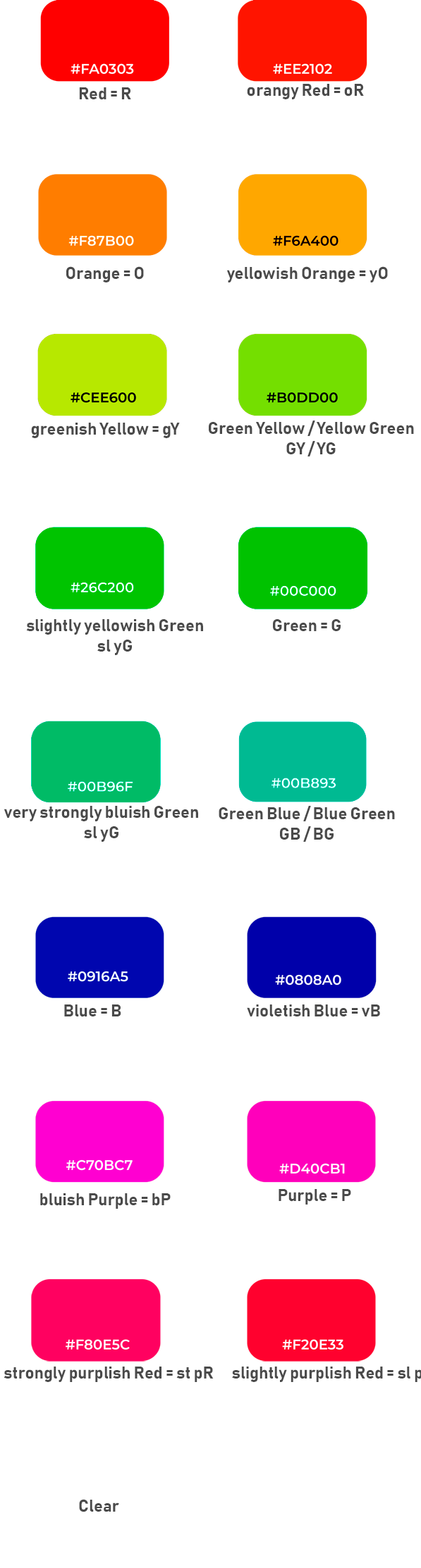
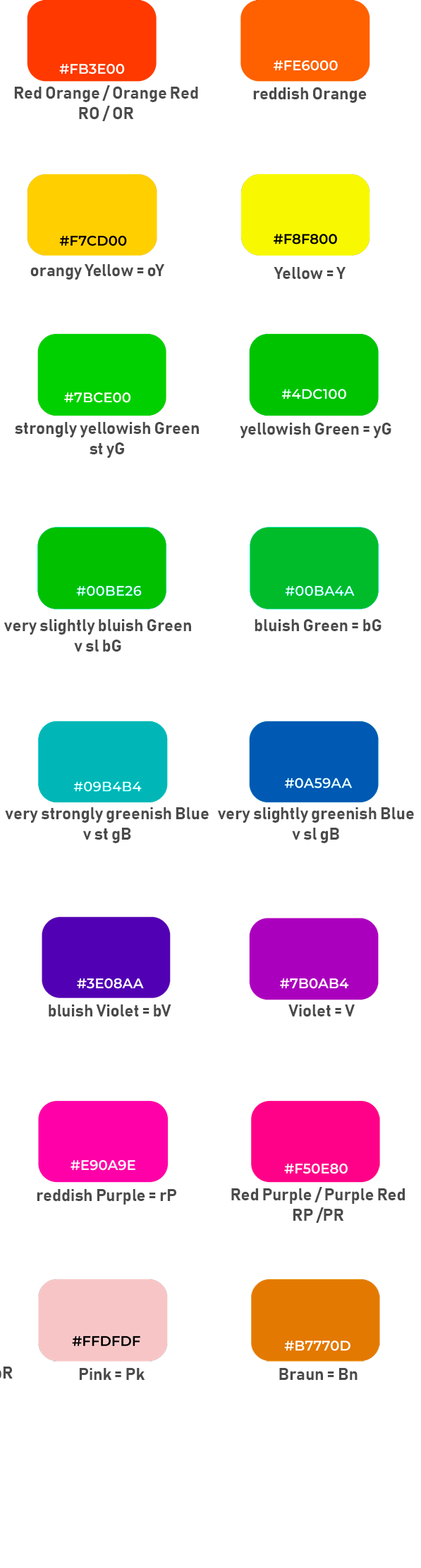
Color is one of the most important factors in determining a gemstone's value. This guide explains the basic color hues and special trade names used in the gemstone industry.
Basic Color Hues
Color Trade Names
Pigeon Blood
Ruby
Intense red color with medium to strong fluorescence. Uniform color distribution with no obvious visible inclusions below the table.
Padparadscha
Sapphire
Light orangy pink to pastel orangy pink. A subtle mixture of pink-orange to orange-pink with pastel tones and low to medium saturation.
Royal Blue
Sapphire
Intense blue, vivid blue or deep blue with even color distribution. Flawless to transparent clarity without pronounced visible inclusions.
Cornflower
Sapphire
Intense blue or vivid blue with even color distribution. Transparent clarity with small amount of turbidity for a "velvety appearance".
Lavender
Sapphire
Intense violet, vivid violet or deep violet with even color distribution. Flawless to transparent clarity without pronounced inclusions.
Teal
Sapphire
Bluish green to greenish blue variations. Flawless to transparent clarity without pronounced visible inclusions below the table.
White
Sapphire
Colorless color grade with flawless to transparent clarity. Good return of light without major windowing or extinction area.
Paraiba
Tourmaline
Pastel bluish green to neon blue colors. Even color distribution with flawless to transparent clarity and natural or heated origin.
Santa Maria
Aquamarine
Pastel greenish blue to deep blue colors. Even color distribution with flawless to transparent clarity and natural color origin.
Muzo Green
Emerald
Intense green, vivid green or deep green with very low to no presence of iron. Even color distribution with flawless to transparent clarity.